MUSE PRIME Focus Breathing: What a Moving Shot Must Test
ELYSAS lists less than 2% focus breathing for its six T1.8 primes and separate figures for the 135 mm Macro. This guide explains what those manufacturer figures do and do not establish, then sets out a repeatable moving-image test for framing change, focus marks and shot continuity.
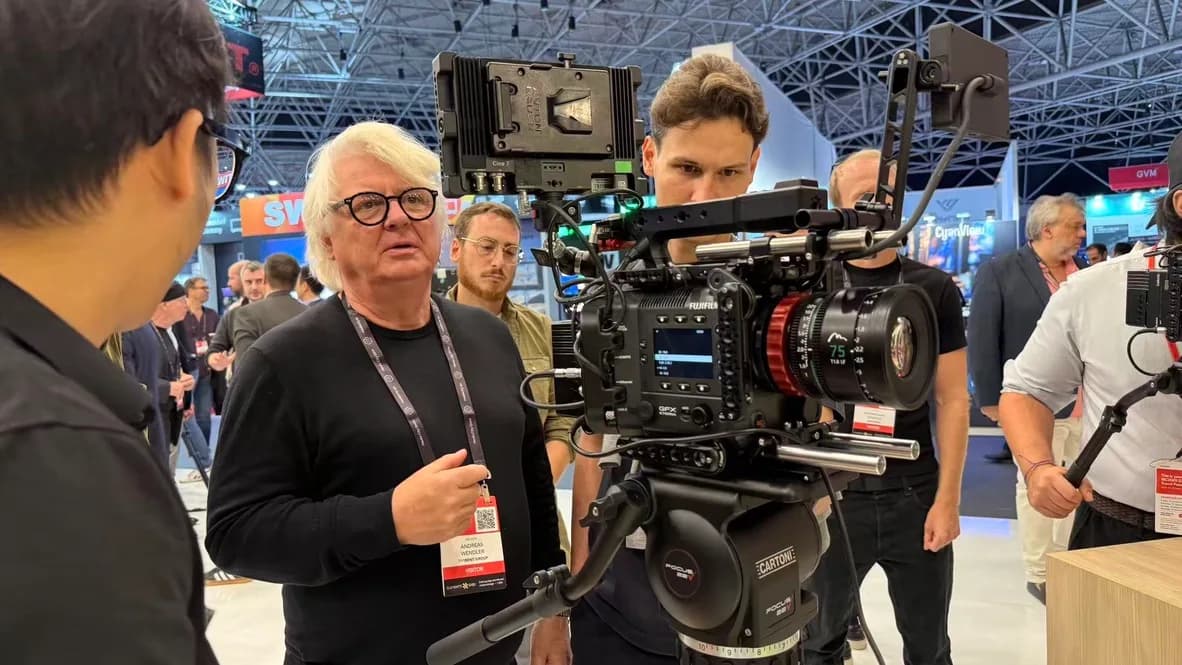
Previously supplied author photograph; illustrative only. Capture settings for image examples were not supplied, and this is not an independent lens test.
GLOBAL IMAGING BRIEF
Why it matters
Low-breathing specifications can simplify a lens shortlist, but a percentage without its measurement method cannot decide an edit. Cinematographers, focus pullers and rental teams should compare the actual focus travel and background framing in their planned camera mode before promising that an active pull will be visually invisible.
Full perspective
Focus breathing describes a change in the lens's angle of view as focus is adjusted while the camera viewpoint stays fixed. It is easiest to notice when a stationary background appears to expand or contract around a subject during a rack focus. The effect is distinct from the intended change in which object is sharp, and it is not a measure of autofocus speed or focus-ring feel. In a finished scene, its visibility also depends on composition, the distance between subject and background, and how the focus move is edited.
ELYSAS's MUSE PRIME table lists less than 2% breathing from infinity to close focus for the 25, 32, 40, 50, 75 and 100 mm T1.8 lenses. For the 135 mm T2.8 Macro it lists approximately 3% from infinity to 0.1× and approximately 17% from 0.1× to 1×. These are manufacturer-published figures for different focus intervals. The public table does not provide the full curve, the measurement target or an independent audit, so it cannot tell a crew exactly how every intermediate focus mark will appear in motion.
01
Read the Interval Before the Percentage
A figure quoted for infinity-to-close focus is not automatically comparable with one quoted for a macro segment, because the endpoints and the image scale differ. Nor does a single percentage prove that breathing changes linearly across the travel. For a dialogue shot, the relevant range may be only between two actor marks; for a product shot it may extend toward life-size reproduction. Mark the actual start and end focus positions before deciding whether a published whole-range figure is relevant.
The 135 mm Macro's listed 0.1× to 1× range is not a claim that the frame suddenly jumps at 0.1×. It is a summary over that interval; the local rate of change is not disclosed. At high magnification, foreground size and background relationships may also change substantially as focus shifts. The camera team should separate this expected macro geometry from a lens-induced field-of-view change rather than attributing every visible scale change to breathing.
02
Design the Test Around a Real Shot
Use the camera body, sensor crop and recording mode planned for production. Lock camera position and focal length, place distinct reference features near the frame edges and choose foreground and background objects at the intended subject distances. Record the focus move as video at the intended frame rate. A static chart can help establish endpoints, but moving footage is needed to judge whether the change is distracting at the speed and duration of the actual shot.
Repeat the move with the same focus endpoints rather than comparing one lens at its closest mark with another at a different subject scale. Note frame-edge displacement, apparent background scale and any focus marks that are hard to reproduce. Keep a copy of the unprocessed file and log aperture, camera mode, distance and follow-focus settings. These controls help distinguish optical behavior from camera movement, stabilization crop or an inconsistent test setup.
03
Measure Framing, Not Just Focus Speed
A faster pull compresses the visible change into a shorter time; a slower pull spreads it out. Neither changes the total optical field change between the same endpoints. To quantify a result, choose reference features that remain visible through the move and compare their positions in the recorded frames. If parts of the scene blur beyond reliable tracking, report that limitation rather than deriving a precise percentage from an unsuitable clip.
Review the full frame at delivery resolution and ask whether the shift competes with the intended eye line or cut. If it does, options include narrowing the focus range, changing blocking, adjusting the camera move or allowing a measured crop. A post-production scale correction may hide part of a uniform framing change, but it uses image area and may not restore shifting foreground-to-background relationships. The choice belongs to the shot, not to a specification number alone.
04
Keep Exposure and Mechanics Separate
The six standard primes are listed at T1.8 and the 135 mm Macro at T2.8. That transmission difference matters for matching coverage, but it does not explain or correct breathing. When comparing the set, hold camera position and scene lighting fixed for the geometric test; adjust exposure separately and document any aperture or sensitivity change. Avoid using a brighter image as evidence of a more stable frame, or a darker macro image as evidence of poor optical alignment.
ELYSAS lists a 270-degree focus rotation and standard cinema gearing in its specification table. These published mechanical dimensions can guide a focus-puller's preparation, but the feel and repeatability of the particular rental copy still need checking. Calibrate the motor, mark the intended endpoints and watch for backlash or interference with the matte box. A mechanical handling issue can make a pull hard to execute even when the lens's optical breathing is modest.
05
Respect the Limits of the Public Data
The manufacturer's percentages do not disclose the detailed test target, camera format, intermediate curve or sample variation. We have not independently measured them. The published 46.5 mm design image circle is also a coverage parameter, not a claim that every edge retains identical performance during a focus pull. If a production relies on a large sensor area or edge-heavy composition, include those exact modes and framing choices in its lens test.
A still image or edited reel may demonstrate a desired aesthetic, but it cannot reveal a complete focus trajectory or prove a numeric breathing value. The photographs accompanying this article were supplied previously by the author and are illustrative; their capture settings were not provided. Treat the MUSE PRIME page as a manufacturer source, then use original motion footage from the intended camera package to close the project-specific evidence gap.
06
Questions Before a Rental or Purchase
Ask the dealer how the quoted breathing values were defined and whether a full focus-range plot or suitable original clips are available. Confirm the exact mount version and focus motor setup, then request a hands-on session with the intended camera mode, focus endpoints and background. For the 135 mm Macro, include the actual reproduction ratio; its published closest-focus distance does not substitute for the clearance and composition required by your shot.
The value of a lens-set test is a decision that the shooting and post-production teams can repeat, not a single attractive percentage. ELYSAS provides the published MUSE PRIME specification and an official dealer route for inquiries. Bringing the planned shot, an agreed measurement method and unprocessed footage to that conversation makes the result useful for a real production while keeping manufacturer statements separate from verified on-set performance.
Original source
Original technical analysis based on ELYSAS's public MUSE PRIME specification table. The focus-breathing figures and image-circle size are manufacturer statements, not independent measurements. The photographs were previously supplied by the author for illustration; capture settings were not provided. This is not a new-product announcement.