MUSE PRIME 25 mm: Framing a Person Without Losing the Place
The MUSE PRIME 25 mm T1.8 invites an environmental portrait, but focal length alone does not create perspective or subject separation. This technical guide examines camera distance, frame edges, sensor mode, focus and rigging, then proposes two controlled tests before a production commits to the lens.
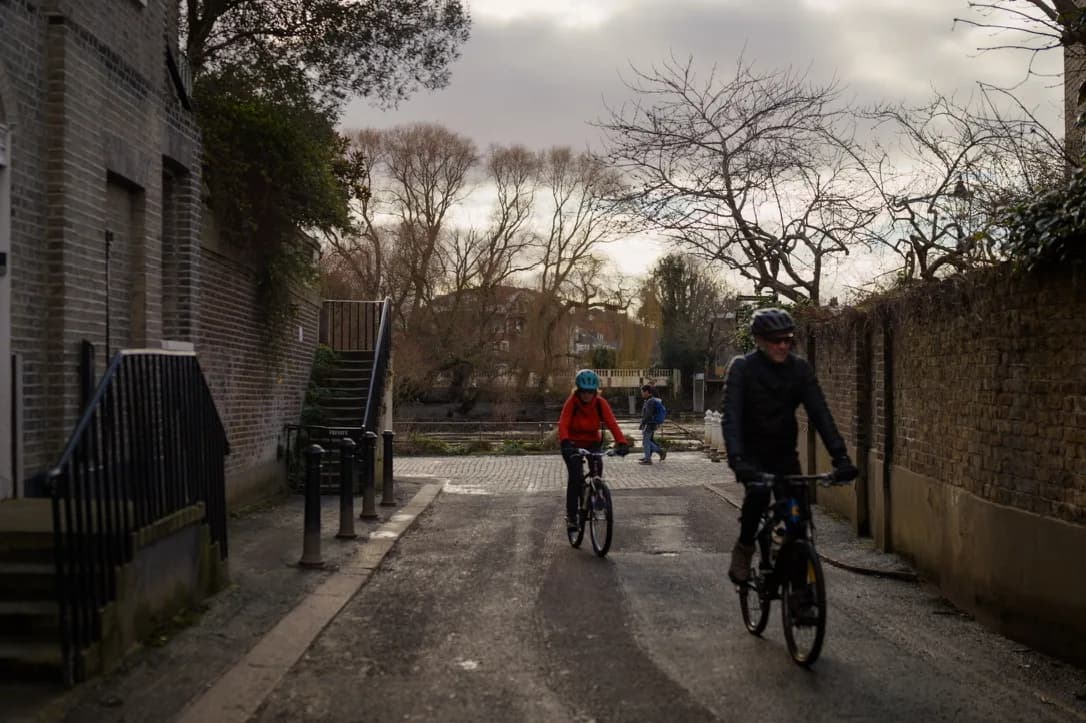
Previously supplied photograph, used to illustrate spatial layering. Its capture lens and settings were not supplied; it is not a verified 25 mm lens sample.
GLOBAL IMAGING BRIEF
Why it matters
For cinematographers and rental teams, the useful question is not whether 25 mm is broadly cinematic. It is whether the intended camera position preserves facial proportions, readable location detail and consistent framing in the actual recording mode. Manufacturer specifications narrow the shortlist; controlled footage answers the shot-specific question.
Full perspective
An environmental portrait asks a lens to keep the person legible while allowing the location to remain part of the story. ELYSAS presents its MUSE PRIME 25 mm as a wide option for that purpose, and lists it at T1.8 with a 46.5 mm design image circle. Those are manufacturer specifications, not a prescription for camera placement. A wider field lets more of a room or street enter the frame from one position; it does not, on its own, make the foreground look larger or the background farther away. Perspective follows the position of the entrance pupil relative to the scene. The photographer creates a particular near-to-far relationship by moving the camera, then chooses focal length and recording area to frame it.
The maker also describes a five-zone approach to image character: foreground defocus, the plane of focus, background defocus, center and outer field. That is a useful checklist for a lens test, but it is not independent evidence that every face, practical light or edge detail will behave a particular way. This article separates the published product facts from general optical reasoning and sets out what a crew should actually record before using the 25 mm for a dialogue scene, group frame or moving portrait.
01
Move the Camera Before Judging Perspective
If a 25 mm and a longer lens photograph the same subject from the same viewpoint, their shared central scene retains the same geometric perspective; the wider lens simply includes more surroundings. To hold the subject at the same size after switching to 25 mm, the camera normally moves closer. That change in position increases the relative size difference between a nearby face and a distant wall. In a close portrait it can make facial depth or a foreground hand more prominent. This is a camera-distance consequence, not a mysterious distortion signature unique to ELYSAS.
For an interview or character close-up, start with the distance that gives the desired facial proportions, then decide whether the remaining environment is useful. A two-shot or location-establishing portrait may benefit from the extra field while allowing the camera to stay farther back. Do not solve an overcrowded background only by opening the iris: depth of field, the amount of visible context and the relative scale of background objects are different variables. Blocking, lighting and camera height may be more effective than a lens swap.
02
Give the Outer Field a Job
A wide frame places more architecture, movement and practical lights near its edges. Decide which details must remain readable and which may recede. A face placed off-axis deserves special attention: compare its shape and texture with the same face near the center, rather than judging only a chart in the middle. Also inspect straight lines and bright points close to the borders. Distortion, field curvature, falloff and off-axis blur are separate phenomena; a single attractive still cannot establish their behavior through focus and aperture changes.
ELYSAS lists a 46.5 mm design image circle for the series and says usable coverage may extend beyond it. A coverage statement is not a promise of identical resolution, illumination or rendering at every image height. The crew should therefore specify the exact sensor mode, aspect ratio and stabilization crop it intends to deliver, then examine the outer field on that mode. If reframing or horizon correction is planned, include the intended margin in the test instead of assuming nominal image-circle size guarantees a clean final corner.
03
Separate Exposure, Blur and Subject Distance
The 25 mm belongs to the six MUSE PRIME focal lengths listed at T1.8. T-stop concerns transmitted light, not a fixed amount of background blur. At a chosen subject distance and camera format, opening the iris can reduce depth of field, but the visible blur also depends on how far the background is from the focus plane and how large its highlights are. If a portrait needs to retain a recognizable place, maximum aperture may erase the very information the location is meant to provide. Test an open stop and a more closed working stop with the same framing and lighting notes.
ELYSAS calls its intended focus-to-defocus transition Melted Bokeh. The phrase describes the maker's design aim; it is not a measurable result for this particular production until footage is reviewed. Place a textured background and several practical lights at known positions, then watch the transition as the subject or focus plane moves. Compare both still frames and motion footage at delivery size. Look for whether the environment remains legible, whether edge highlights draw attention away from the person and whether the chosen stop supports the scene's narrative priority.
04
Test Motion with the Actual Camera Package
ELYSAS publishes a focus-breathing figure below 2% from infinity to close focus for the 25 mm. It does not publish a full intermediate curve or a method that lets this article verify the figure independently. A focus pull within the planned actor marks may be shorter than the quoted whole range, yet still noticeable if a strong edge line is present. Lock the camera for one pass, put reference features near the frame borders and record the intended focus travel. Then repeat with the planned handheld, stabilizer or dolly move to see how optical field change interacts with camera motion.
The maker lists PL and LPL mount choices, a common 95 mm front diameter, an 86 mm filter thread and aligned gear positions across the set. These published dimensions help a camera assistant plan a matte box and follow-focus, but they do not prove that a particular rig will clear every accessory or remain balanced after a lens swap. Check the chosen mount, filter stack, motor reach, cable clearance and full camera balance with the intended body. Save unprocessed takes and a setup log so the result can be reproduced, not merely remembered.
05
Run Two Tests That Answer Different Questions
First, keep the camera at one fixed viewpoint and compare the 25 mm with a longer MUSE PRIME in the same sensor mode. Do not crop and then call the result a native match: record the full fields, then compare the common central region to isolate changes in field coverage and rendering. Keep scene lighting, focus target, T-stop and processing as consistent as practical. This test is useful for asking what additional context enters the 25 mm frame and whether that context remains useful at the edges.
Second, match the person's size in the finished frame by moving the camera for each focal length. This deliberately changes viewpoint and reveals the production trade-off: facial proportions, background scale, spatial separation and room for lighting. Keep the actor's mark and background arrangement documented, and review the results as an edit rather than isolated hero frames. If the two tests disagree, that is not a failure; they answer different questions. The distinction prevents a distance-driven perspective change from being attributed to an unmeasured lens defect.
06
Questions for the Lens Test or Rental Desk
Ask which exact PL or LPL copy is available, whether focus and iris marks have been checked, and whether its accessories fit the intended camera package. Confirm the recording area and delivery crop before judging the published image-circle figure. If a shot places a face or a critical prop near the border, request footage with that blocking at the intended working stop. A manufacturer gallery can suggest an aesthetic, but without matching camera, distance and processing it cannot substitute for this production's own test.
The defensible decision is a documented choice of viewpoint, frame, stop and camera mode. ELYSAS provides product specifications and an official route to arrange a hands-on test; this article supplies a method for asking better questions, not an independent verdict on optical performance. Before committing to the 25 mm, bring a shot list, a simple edge-and-focus test and unprocessed footage to a conversation with the official dealer. That gives the person and the place a deliberate relationship on screen, rather than relying on the focal-length label to create one.
Original source
Original editorial analysis based on ELYSAS's public MUSE PRIME specifications and Melted Bokeh description. Product dimensions, image-circle and breathing values are manufacturer statements, not independent measurements. The accompanying photograph was supplied previously for illustration; its capture lens and settings were not provided. This is not a new-product announcement.