GLOBAL IMAGING BRIEF
Why it matters
Rental teams and DPs must verify that their specific sensor formats fall within the safe zone of this image circle to avoid vignetting or quality degradation at the edges during full-frame recording.
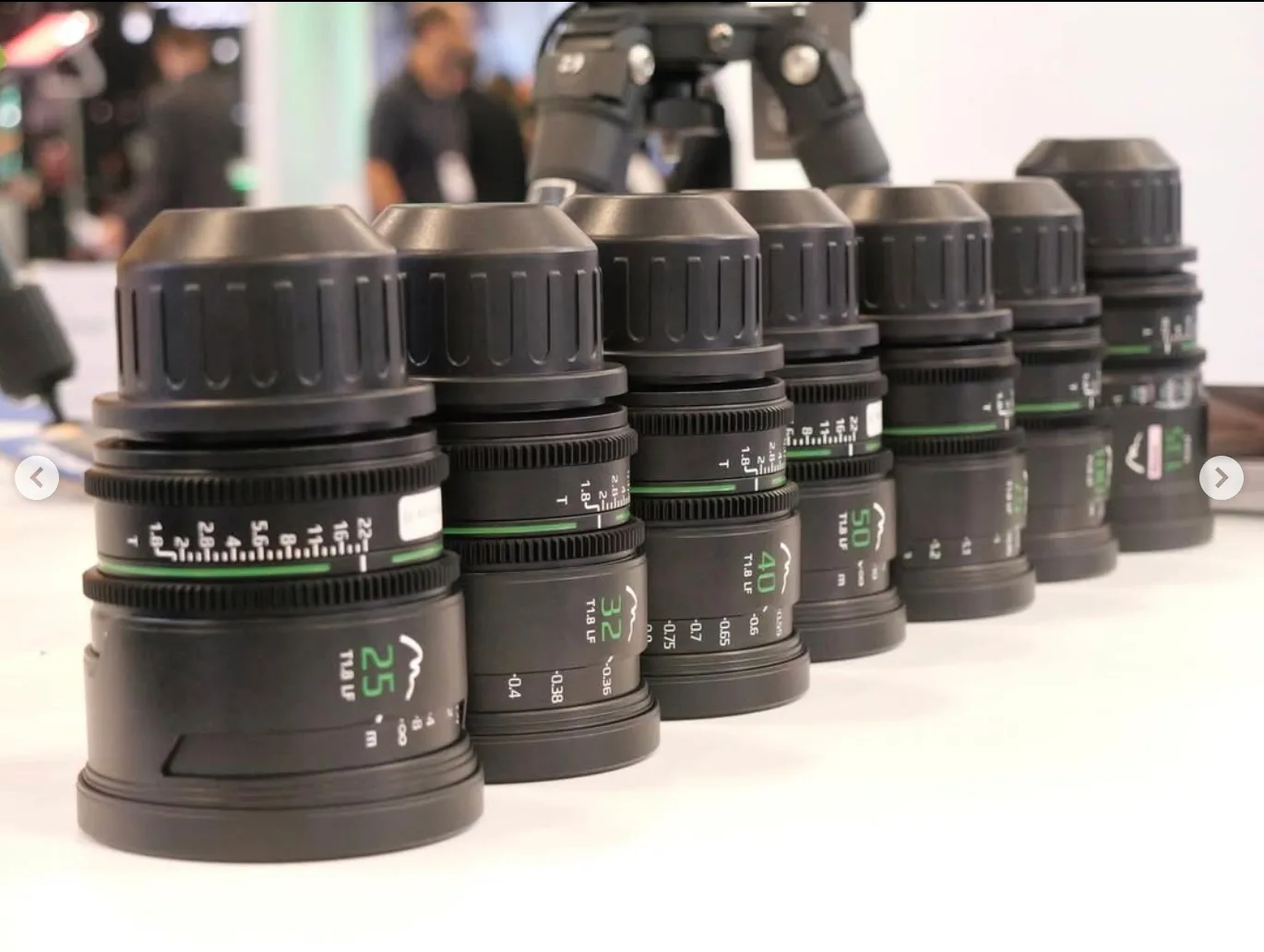
This technical analysis examines the practical implications of the ELYSAS MUSE PRIME series' 46.5 mm design image circle, focusing on sensor diagonal coverage, recording crop stability, stabilization margin, and corner verification. It distinguishes between manufacturer-published optical standards and real-world imaging requirements.
GLOBAL IMAGING BRIEF
Rental teams and DPs must verify that their specific sensor formats fall within the safe zone of this image circle to avoid vignetting or quality degradation at the edges during full-frame recording.
Full perspective
The ELYSAS MUSE PRIME series is built around a published design image circle of 46.5 mm, a specification that defines the geometric boundary of light transmission rather than a guarantee of uniform quality across that entire area. For cinematographers, understanding this distinction is critical when selecting sensors and configuring recording modes. While the maker states that usable coverage can extend farther, this does not imply that every pixel at the edge of the frame will maintain the same sharpness, contrast, or color fidelity as the center. The 46.5 mm figure serves as a baseline for mechanical and optical integration, ensuring that the lens covers standard Full Frame sensors with some margin, but it does not eliminate the need for careful planning regarding sensor diagonals and aspect ratios.
When deploying these lenses, the primary concern shifts from theoretical coverage to practical margins. The published image-circle standard provides a buffer for common sensor formats, meaning that even if a sensor slightly exceeds nominal dimensions in certain aspect ratios, the lens should still project light onto the active area. However, this margin is not infinite. As the recorded frame expands or the sensor format changes, the distance from the center to the corner increases, placing greater demand on the outer zones of the lens. Cinematographers must recognize that 'usable coverage' is a variable term influenced by lighting conditions, aperture selection, and the specific tolerance of the camera's sensor array. Therefore, relying solely on the nominal specification without verifying corner performance under actual shooting conditions can lead to unexpected artifacts or softness in the final output.
The ELYSAS MUSE PRIME series specifies a design image circle of 46.5 mm, which establishes a geometric boundary for light transmission rather than a guarantee of uniform optical quality across that entire area. For cinematographers, this distinction is critical when selecting sensors and configuring recording modes. While the manufacturer notes that usable coverage can extend beyond this nominal figure, it does not imply that every pixel at the edge of the frame will maintain the same sharpness, contrast, or color fidelity as the center. The 46.5 mm specification serves as a baseline for mechanical and optical integration, ensuring that the lens covers standard Full Frame sensors with some margin, but it eliminates no need for careful planning regarding sensor diagonals and aspect ratios.
When deploying these lenses, the primary concern shifts from theoretical coverage to practical margins. The published image-circle standard provides a buffer for common sensor formats, meaning that even if a sensor slightly exceeds nominal dimensions in certain aspect ratios, the lens should still project light onto the active area. However, this margin is not infinite. As the recorded frame expands or the sensor format changes, the distance from the center to the corner increases, placing greater demand on the outer zones of the lens. Cinematographers must recognize that 'usable coverage' is a variable term influenced by lighting conditions, aperture selection, and the specific tolerance of the camera's sensor array.
Understanding the relationship between the image circle and the recording crop is essential for maintaining framing consistency. The 46.5 mm design allows for stable full-frame recording without vignetting, provided the sensor diagonal remains within safe limits. However, when switching to anamorphic modes or using digital crops, the effective area may approach or exceed the optimal performance zone of the lens. This creates a trade-off where wider aspect ratios or heavier stabilization demands may push the sensor corners into regions where optical aberrations are more pronounced. Rental teams must verify that their specific sensor formats fall within the safe zone of this image circle to avoid quality degradation at the edges during full-frame recording.
Stabilization systems often rely on slight cropping to correct shake, which further reduces the available image circle margin. If the base image circle is only marginally larger than the sensor diagonal, aggressive stabilization settings can exacerbate corner softness or distortion. Therefore, the 46.5 mm figure acts as a ceiling for maximum possible coverage, not a guarantee of perfect rendering at every magnification. Operators should test the interaction between stabilization strength and corner sharpness before committing to a shot, recognizing that the lens's optical design prioritizes central performance within the specified circle over extreme edge correction.
The most critical production decision involves verifying corner performance under actual shooting conditions, as manufacturer specifications do not account for real-world variables like lens tilt, temperature, or specific sensor micro-lens arrays. While the MUSE PRIME series aims for consistent rendering across its five-zone evaluation, the transition from the center to the periphery requires careful monitoring. Cinematographers should conduct controlled tests to assess how different focal lengths handle corner stress, particularly when using wider apertures or shooting at closer distances. This verification process ensures that the 'usable coverage' claimed by the manufacturer translates to reliable results on set.
Ultimately, the 46.5 mm image circle is a tool for planning, not a substitute for verification. Rental teams and DPs must develop a protocol for checking corner sharpness and color consistency, especially when moving between different camera bodies or sensor formats. By treating the published specification as a starting point for testing rather than an absolute guarantee, productions can mitigate risks associated with edge artifacts. This approach allows for informed decisions about when to use digital correction tools versus when to adjust camera positioning or lighting to compensate for optical limitations at the frame edges.
The ELYSAS MUSE PRIME series is built around a published design image circle of 46.5 mm, a specification that defines the geometric boundary of light transmission rather than a guarantee of uniform quality across that entire area. For cinematographers, understanding this distinction is critical when selecting sensors and configuring recording modes. While the maker states that usable coverage can extend farther, this does not imply that every pixel at the edge of the frame will maintain the same sharpness, contrast, or color fidelity as the center. The 46.5 mm figure serves as a baseline for mechanical and optical integration, ensuring that the lens covers standard Full Frame sensors with some margin, but it does not eliminate the need for careful planning regarding sensor diagonals and aspect ratios.
When deploying these lenses, the primary concern shifts from theoretical coverage to practical margins. The published image-circle standard provides a buffer for common sensor formats, meaning that even if a sensor slightly exceeds nominal dimensions in certain aspect ratios, the lens should still project light onto the active area. However, this margin is not infinite. As the recorded frame expands or the sensor format changes, the distance from the center to the corner increases, placing greater demand on the outer zones of the lens. Cinematographers must recognize that 'usable coverage' is a variable term influenced by lighting conditions, aperture selection, and the specific tolerance of the camera's sensor array. Therefore, relying solely on the nominal specification without verifying corner performance under actual shooting conditions can lead to unexpected artifacts or softness in the final output.
A 46.5 mm image circle establishes the physical limit of the projection, but it does not dictate how the camera records that data. When a production switches from a full-sensor readout to a cropped mode, the effective field of view narrows, moving the image corners away from the lens's most stressed peripheral zones. This shift often improves perceived sharpness and reduces vignetting, effectively utilizing the stabilization margin inherent in the design. However, this benefit is contingent on the stability of the crop factor across different aspect ratios. If the recording mode alters the active sensor area unpredictably, the lens may suddenly encounter its optical limits, leading to inconsistent framing or exposure falloff. Rental teams must verify that the camera's crop settings align with the lens's intended safe zone to maintain visual continuity throughout the shoot.
Furthermore, the relationship between image circle and stabilization is often misunderstood. A larger image circle does not automatically equate to better image stabilization; rather, it provides more room for the sensor to capture the central, optically superior portion of the projection. In handheld or gimbal-mounted scenarios, where micro-movements are inevitable, having extra coverage allows the digital stabilization algorithms to crop into the sharper center without degrading resolution. This means that the 46.5 mm specification indirectly supports smoother motion work by offering a buffer against mechanical jitter. Nevertheless, this advantage diminishes if the operator pushes the lens to its absolute edges, where aberrations and illumination drop-off become pronounced. Understanding this dynamic helps crews decide whether to prioritize full-frame coverage or leverage the center for enhanced stability.
To move beyond theoretical specifications, productions must implement concrete verification methods for corner performance. A practical test involves mounting the lens on the target camera body, setting it to the widest aperture, and focusing on a high-contrast chart placed at infinity. By examining the four corners of the recorded footage at various T-stops, operators can assess the transition from the center to the edge. It is crucial to compare this data against the manufacturer's claim of extended usable coverage, noting any degradation in sharpness or contrast. This hands-on approach reveals the true extent of the lens's capabilities and identifies potential issues such as chromatic aberration or uneven illumination that may not be apparent in static diagrams. Such testing ensures that the crew is prepared for the specific demands of their sensor format.
Public data regarding the 46.5 mm image circle provides a useful baseline, but it cannot replace independent measurement of corner quality under specific production conditions. Manufacturer pages typically outline general standards rather than detailed performance curves for every focal length and aperture combination. Consequently, assumptions about uniformity across the frame should be treated with caution. Buying or rental decisions should be based on verified results from controlled tests rather than inferred guarantees. For teams requiring precise knowledge of edge performance, arranging a hands-on test through official dealer channels is the most reliable path. This allows for direct evaluation of the lens's behavior on actual equipment, ensuring that the final output meets the artistic and technical requirements of the project without relying on unverified claims.
Original source
Original technical analysis based on ELYSAS's public product information, last dated 21 April 2025 in the specification table. Manufacturer claims are not independent measurements. This article's date is the editorial publication date, not a new product launch. Photograph supplied previously by the author.